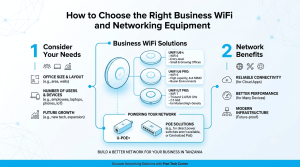
A practical IT plan starts with how a company works, not with a shopping list of devices. A growing office may need stable internet, shared printers and secure Wi-Fi, while a hotel, warehouse or branch-based organisation may also depend on cameras, access control and links between buildings. Businesses in Tanzania can reduce avoidable costs by documenting these needs before selecting equipment.
Map the work before choosing equipment
List the applications staff use, the number of connected devices, areas requiring coverage and systems that must stay online. Separate essential services from conveniences: a point-of-sale terminal or business server may need stronger uptime planning than a visitor lounge display. This makes the design specific to the organisation rather than oversized by default.
Build in security and room to grow
Plan user permissions, guest access, device updates and backups at the same time as connectivity. Select equipment with enough capacity for a realistic growth forecast, and confirm compatibility between routers, switches, access points and security devices. Keep a basic network diagram and inventory so future changes do not depend on guesswork.
Use a phased purchasing plan
A site survey and requirements list can help prioritise the most urgent improvements first. Some organisations should begin with routing and switching; others may need better wireless coverage or a protected power supply. Pran Tech Corner lists networking and security equipment in its product catalogue, and businesses can contact the team to discuss their requirements.